
Tim's Truck Capital & Auto Sales, Inc

Blog

Differences Between the Ford F250 and F350

Ford F250 and F350

Many see the Ford F250 and the Ford F350 and think that they are very similar, and that’s not always the case. While there are a lot of similarities between the F250 and F350, there are a few differences, though many not obvious to the naked eye, and here they are.

Towing capability: Without a doubt, the biggest difference between the two trucks is the amount one can tow. To some, this isn’t that important, but to most serious truck owners, this is something to at least consider. The absolute maximum that a F350 owner can tow is up to 32,000 pounds. The F250 can tow, a still impressive, 18,500 pounds. If you want to tow over 30,000 pounds, you have your answer. If not, keep reading.

Payload: While most people talk about towing capacity, payload is important to consider as well. Both the F250 and F350 offer an impressive payload. The F350, naturally has a higher payload amount, which is 7,640 pounds, while the F250 is still impressive at 4,270 pounds. If you aren’t going to tow a ton or use the payload to the max, the F250 will probably work, though the F350 will get more done and may be worth the extra cash.

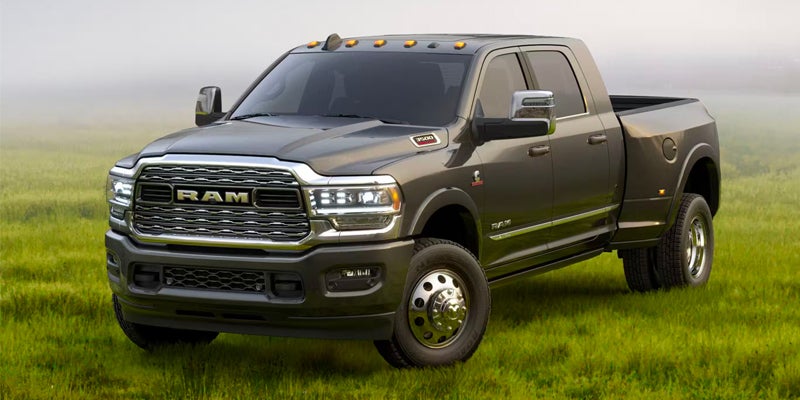
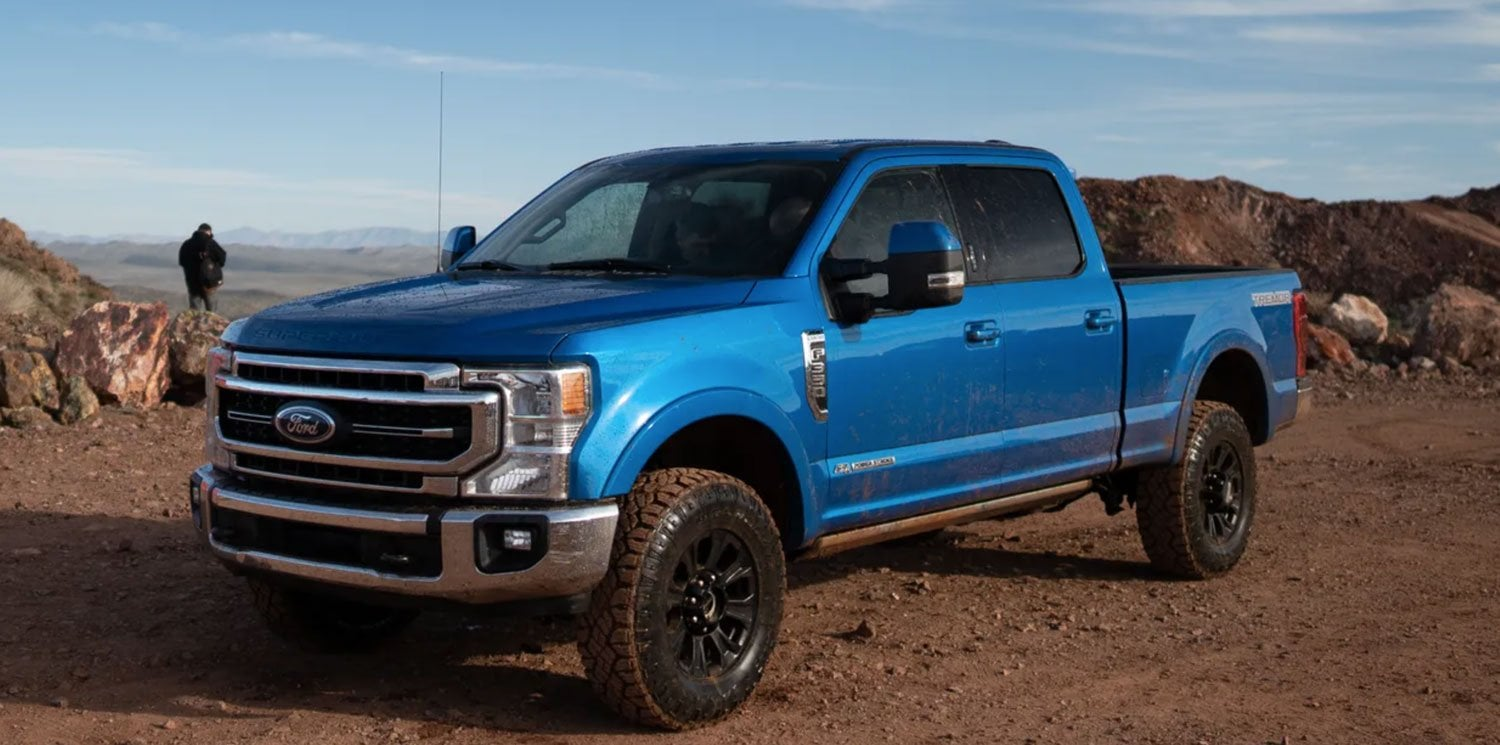
Exterior: To the naked eye, especially someone who isn’t into trucks, the F250 and F350 look similar. And it’s true, they share the same cab, trim size and bed options. The only difference that you can note is that the F350 has the option to have dual rear wheels. This allows more heavy duty towing.

Engines: Again, there isn’t a huge difference in the F250 and F350 when it comes to engines. Both have the same engine options as you can enjoy the 6.2 liter, Boss SOHC V8 engine, which offers 430-lb-ft of torque and 385 horses. Buyers can also enjoy the 6.7 liter turbo diesel, Power Stroke V8. This offers an astounding 935 lb-ft of torque and 450 horsepower. The truth is, in raw power, both are very impressive, and if you aren’t towing or carrying a heavy payload, you may not notice the difference. Both the F250 and F350 can be converted to run on Bi-Fuel, so they can run on both gasoline and propane or compressed natural gas.

While there is no right answer, if you want to consider if the F250 or F350 is better, there are a couple of important points to consider. If you upgrade the F350 towing capacity, you may have to get a commercial vehicle license in some states, and it’s best to verify the laws in your state. If that doesn’t matter, you should be okay to go with either, because the price is usually close. The F250 is probably the best option if you aren’t planning to put massive payloads in your truck or towing huge loads. Either way, if you want to check out the F250 and F350 and see what feels better for you, head to Tim’s Truck to check them out.
Recommended Posts

Best Trucks for Landscaping in New Hampshire. Can You Dig It?

Best Trucks for Landscaping in New Hampshire. Can You Dig It?

Landscaping in New Hampshire is tough on trucks. Spring mud, summer trailers, fall cleanup, and winter downtime all put different demands on the same vehicle. For landscapers working around Nashua, Manchester, and the rest of Southern New Hampshire, the best truck is not just the one with the biggest badge. It is the one that balances payload, towing, bed utility, four-wheel-drive confidence, and day-long comfort. What should landscapers look for first? For most landscaping businesses, the priority list is pretty consistent: payload for mulch, stone, and tools; towing for trailers and compact equipment; bed access for daily loading; and dependable 4x4 performance when jobsites get soft or slick. Insurance, fuel costs, and maintenance also matter, especially for crews putting serious miles on their trucks every week. That is why half-ton pickups usually make the most sense for broad landscaping use, while heavy-duty trucks are better reserved for bigger trailers and heavier equipment. Why does the Ford F-150 make so much sense? The Ford F-150 remains one of the smartest landscaping trucks because it covers so many use cases well. Depending on configuration, the 2025 F-150 can offer up to 2,225 pounds of payload, which is strong enough for tools, fuel cans, blowers, and a meaningful load of materials without stepping into heavy-duty territory. It also offers serious towing capacity, so it works well for utility trailers, mower trailers, and small equipment haulers. For Southern NH businesses that need one truck to do almost everything, the F-150 is hard to beat. Is the Chevy Silverado 1500 a strong alternative? Yes. The Chevrolet Silverado 1500 is another excellent landscaping choice, especially if payload matters. Properly equipped 2025 models can reach up to 2,260 pounds of payload, making the Silverado especially useful for crews carrying heavier in-bed loads during busy seasons. It also offers strong towing across multiple configurations, which helps if you regularly pull trailers loaded with stand-on mowers, mini skid steers, or hardscaping equipment. What about the Ram 1500? The Ram 1500 earns its place because it blends work capability with a more comfortable ride than many competitors. That matters when your day includes multiple jobs spread across towns or long highway stretches between supply yards and customers. Properly equipped 2025 Ram 1500 models can offer up to 2,370 pounds of payload and up to 11,550 pounds of towing, making them very usable for landscaping operations that need a truck to pull hard and still feel livable every day. Does a midsize truck ever make sense? It can. For solo operators or smaller crews, a Toyota Tacoma can be a practical option. It is easier to park, easier to maneuver on tight residential streets, and still capable enough for lighter trailer work, with properly equipped models offering up to roughly 6,500 to 6,800 pounds of towing depending on configuration. If your business is more maintenance-focused than equipment-heavy, a midsize truck can still get the job done. Find the Right Landscaping Truck at Tim’s Trucks At Tim’s Trucks, we know New Hampshire work is seasonal, demanding, and never as tidy as a brochure makes it look. Whether you need a capable half-ton for mowers and mulch or a harder-working setup for trailers and equipment, we can help you find a truck that fits the way your business actually runs. Visit Tim’s Trucks to compare inventory and find the pickup that is ready to work as hard as you do. View Pre-Owned Trucks

Fuel Prices Are Changing- Should You Go Diesel or Gas?

Fuel Prices Are Changing- Should You Go Diesel or Gas?

Now, this is not a new question by any stretch of the imagination, but it is one that many vehicle owners may be asking themselves in light of rapidly rising fuel prices. Our article: Fuel Prices Are Changing- Should You Go Diesel or Gas? seeks to shed light on this pertinent question, which is bound to spark many a debate. What's the difference between diesel and gasoline? So, for the benefit of the uninformed, both are petroleum products that differ significantly in use. Diesel has traditionally powered heavy machinery such as trucks, generators, and even locomotives that demand more torque than horsepower. Gasoline, the lighter and more highly refined fuel, has always been the go-to energy source for passenger and sporty vehicles that prioritize speed over brute towing or load hauling strength. The fuel/air mixture is ignited through very high compression ratios in a diesel engine, whereas gasoline engines use an electric spark to ignite the fuel mixture. Diesel fuel is thicker, has a higher energy density, and evaporates more slowly, meaning it produces 20% more energy per unit volume than gasoline. So, logic dictates that diesel should be a more efficient and cost-effective fuel choice, as it produces more energy and is therefore cheaper to run? Well, yes and no. Diesel engines are more fuel-efficient thanks to their slower rate of fuel combustion at lower rpms for the same power output, but other factors will influence buyers' decisions about whether to choose diesel or gas. Factors that influence your diesel vs gas buying decision. Let's take a look at the factors buyers should consider when deciding on their fuel of choice. Pump Price At the time of writing this article, diesel prices are hitting $5.50–$5.60 per gallon, while regular gasoline averages around $4.16 per gallon and premium gas averages around $5.04 per gallon. Clever folk doing the maths will be able to work out that the 20% odd greater fuel efficiency of a diesel offsets the higher pump prices of diesel, but that's when other factors come into play. Upfront costs Diesel engine models do incur higher upfront purchase costs. The latest 2025/2026 Chevy Silverado 2500HD 6.6-liter Duramax diesel, for example, costs approximately $9,500 to $10,000 more in MSRP than the 6.6-liter gasoline model. But if you plan to hang on to the diesel for longer and you drive 15,000 miles or more per year, its enhanced fuel efficiency will make sense. Vehicle Usage New diesel passenger sedans or hatchbacks are becoming a rare sight in the USA. Most new luxury SUVs and heavy-duty trucks are available with diesel engine options that provide the towing capacity needed for stress-free towing of large boats and campers, as well as for heavy-duty cargo hauling and towing in work trucks. Find your next pre-owned vehicle at Tim’s Trucks. Be sure to contact the team at Tims Trucks when shopping for your next pre-owned vehicle. Our experienced and knowledgeable sales team will confidently take you through all the ins and outs of the various models from our wide selection of quality pre-owned vehicles. View Pre-Owned Diesel Trucks

Failed to scrape

Error scraping content from https://timstruckcapital.com/blog/10-things-subaru-outback: Failed to fetch: 403 Forbidden